Water
Probably Stolen bottles and Bottle Printer: get the right container
The Bottle Printer starts with 450 ml bottles. The first three-electronic-part upgrade unlocks 750 ml; six more parts unlock 2 L, for nine parts total. The community record gives 4, 6 and 11 charge per print respectively. A pitcher, large jug and wine bottle have other sources and roles; buying a usable empty bottle can be better than funding a printer upgrade.
Match the vessel to the actual operation
An empty container is productive capacity. A full jug of unsold water cannot also receive another farm cycle, and an ordinary water bottle is not the wine-fermentation bottle. Decide whether you need a treatment pitcher, a measured volume, a farm output vessel or a sale container before paying.
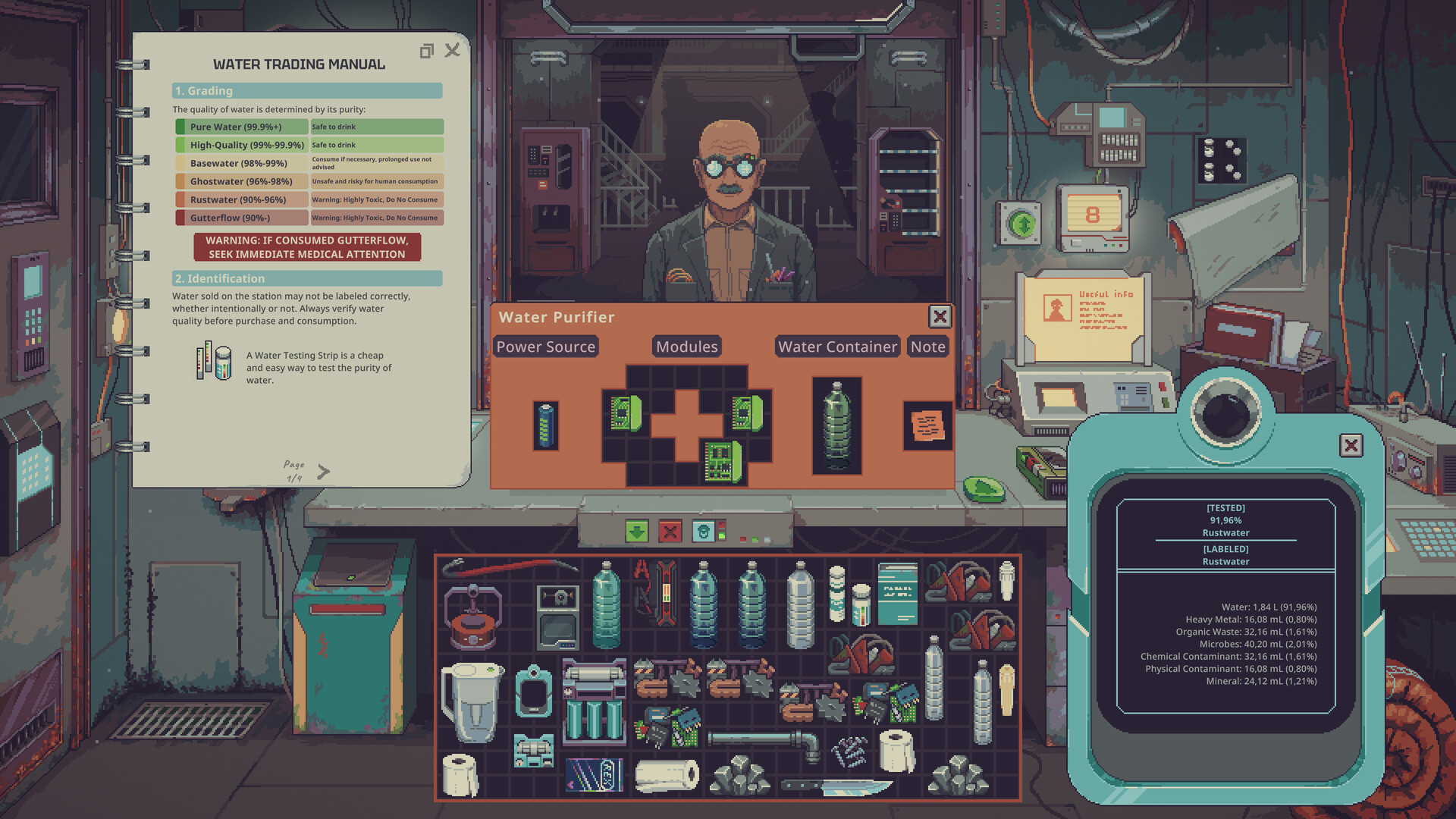
Use the source for the required size
| Vessel | Recorded source | Useful job |
|---|---|---|
| 450 ml water bottle | Base printer; tier-1 water customers. | Small sale batches or the measuring sequences. |
| 750 ml water bottle | First printer upgrade; lower-level water buyers. | A measured wine-water quantity and sale stock. |
| 2 L water bottle | Second printer upgrade; upper-level stockpiler and some other visitors. | Larger storage or volume subtraction. |
| 3 L pitcher | Household-sign seller. | A slot for filter, UV or Kotton; pouring activates the fitted treatment. |
| 6 L jug | Upper-level water stockpiler and some random/event customers. | Bulk stock; not a supported Bottle Printer size in these sources. |
| Wine bottle | Wine suppliers, including the unlocked retired winemaker. | Ferment wine; not interchangeable with an ordinary empty water bottle. |
The water source also describes chemical bottles inside chemical supply boxes, then warns that those boxes are no longer unpackable in the demo. Do not make your next batch depend on getting those bottles through an unavailable action. The measurement guide includes a 50 ml route that avoids them.
Upgrade the machine and still pay for the print
| Printer state | Electronic-parts investment | Recorded charge per operation |
|---|---|---|
| Starting 450 ml option | No size upgrade. | 4 |
| 750 ml option | 3 parts for the first upgrade. | 6 |
| 2 L option | 6 additional parts after the first upgrade: 9 total. | 11 |
- 450 ml: starting option
4 charge for one operation. Confirm the battery first.
- Add 3 electronic parts
Unlock the 750 ml option. 6 charge for one operation.
- Add 6 more parts
9 parts invested in total. Unlock 2 L at 11 charge.
- Print only needed capacity
Retain a vessel for production. Sell or refill the finished stock.
Open the printer, verify which size is actually unlocked, load sufficient usable charge and use the corresponding output control. UPDATE 049 officially added the electronic-part size upgrades. The player discussion about adding printing materials is a design suggestion, not evidence that the current print requires a separate plastic input.
Compare buying and printing costs
If a customer offers the exact empty vessel you need, compare its current quote with the charge and missing upgrades required to print it. Do not spend three parts merely to avoid a cheap bottle while leaving the battery unfunded.
Printing makes more sense when the machine and upgrade are already owned and you need repeatable capacity. A 2 L print still ties up 11 charge. Check what that energy would otherwise run tonight and whether the produced water has buyers.
Water buyers can also be sources of vessels. Use a genuinely tested display sample to attract the intended tier, then inspect the actual visitor’s stock; a display roll is not an instant guaranteed order.
Finish with a vessel for the next cycle
Keep one usable output container with the farm, enough space for the batch being treated and an appropriate vessel for the sale. In UPDATE 049 a filled liquid container is Water merchandise and an empty one is Household merchandise, so emptying it can change the display role too.
Test and label the liquid you refill. Producing an empty bottle does not turn the next contents into a higher grade, and pouring new water into a previously labeled vessel is a reason to check the actual result again.
Source: Water and You, containers and Bottle Printer sections. Community mechanics describe the current demo; read the actual item and customer information before spending.