Wine
Probably Stolen wine recipes: choose a batch from the ingredients you have
With one standard berry, 750 ml of High-Quality water and normal yeast, the reported demo result is Production Wine in two days. Two small berries with that water reach Master Vintage with or without yeast; yeast changes the waiting time. Use the ingredients you can fund; Synthetic Yeast makes a separate contraband product.
Use one complete bottle as the unit
Every ordinary-wine case below uses an empty wine bottle and exactly 750 ml of water. The results are a finite set checked against the player-test sheets linked by The Exceptional Fisherman’s demo guide. This is not an all-recipes or full-release table.
| Berries + tested water + yeast | Reported result | Fermentation | Useful when… |
|---|---|---|---|
| 1 standard berry + High-Quality water + normal yeast | Production Wine | 2 days | You want a straightforward batch from common complete inputs. |
| 1 standard berry + Basewater + normal yeast | Homebrew | 2 days | Basewater is already on hand and obtaining better water would block the funded batch. |
| 2 small berries + High-Quality water + normal yeast | Master Vintage | 2 days | The better fruit and second berry are affordable without using the bill reserve. |
| 2 small berries + High-Quality water + Super Yeast | Master Vintage | 1 day | Finishing earlier is worth the different yeast cost; it does not add a further quality point here. |
| 2 small berries + High-Quality water + no yeast | Master Vintage | 4 days | You can accept the longer wait; these two berries already reach the top ordinary-wine tier without yeast. |
| 1 moldy berry + High-Quality water + normal yeast | Bucket Brew | 2 days | Only as a deliberately low-grade batch; do not buy moldy fruit expecting the standard recipe. |
Inspect berries individually before using the table. “Small” and “standard” refer to the fruit condition described by the community recipe record. Do not infer the category simply from the on-screen bunch size.
Ordinary wine combines ingredient contributions
For the one- and two-berry recipes here, count each berry separately: every standard berry contributes one point and every small berry contributes two. Using two berries also adds a separate one-point bonus in these tested cases. Ordinary yeast adds one, and High-Quality water adds one. One standard berry with that water and yeast scores three. Two small berries score 2 + 2 + 1 + 1 + 1 = 7 with yeast, or six without it; both reach Master Vintage.
| Ingredient choice | Reported quality contribution | Practical effect |
|---|---|---|
| Moldy berry | −1 | Can pull an otherwise usable combination down to low-grade wine. |
| Overripe or underripe berry | 0 | Does not provide the standard berry’s contribution. |
| Standard / small berry | +1 / +2 | The fruit condition changes the starting quality. |
| Two berries | +1 extra, after counting both berries | The second berry contributes its own condition score as well as enabling this bonus. |
| Ordinary yeast, bioreactor yeast or Super Yeast | +1 | The reported quality contribution is the same; fermentation speed differs. |
| Pure / High-Quality / Basewater | +1 / +1 / 0 | Pure Water does not add another point beyond High-Quality in this community record. |
| Ghostwater / Rustwater / Gutterflow | −1 / −2 / −3 | Using lower water can offset gains from fruit and yeast. |
In the linked player-test model, one point is Bucket Brew, two is Homebrew, three or four is Production Wine, five is Reserve and the tested scores of six or seven produce Master Vintage. Two standard berries with High-Quality water and yeast score five and reach Reserve. Two small berries with Basewater and yeast score six and also reach Master Vintage: better water does not create a tier above Master. These are reported demo results; they are not a full-release guarantee.
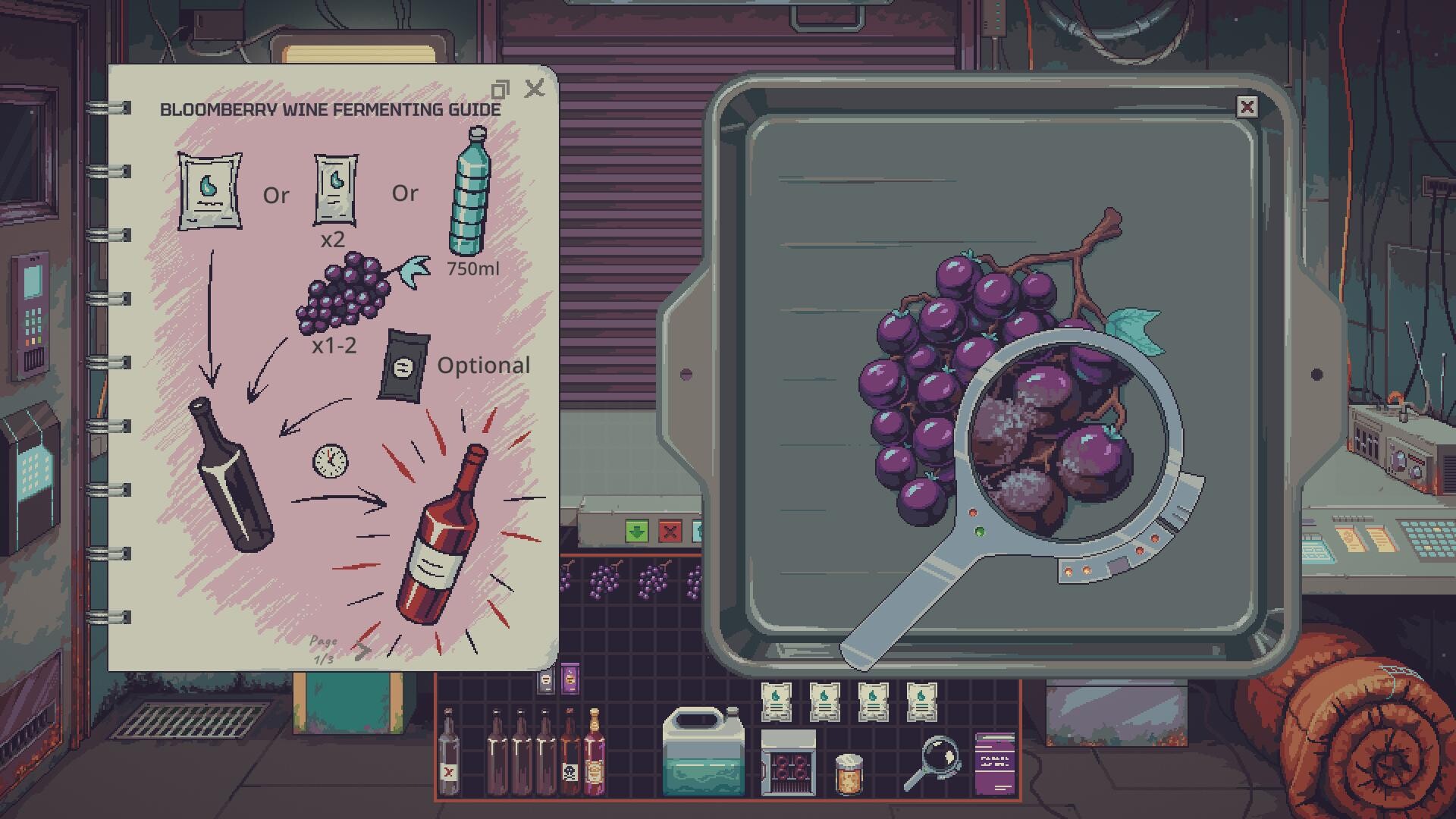
Check both berries before counting the bonus
- Small + Small: 2 + 2 = 4
Both berries contribute their own condition score.
- Two-berry bonus: 4 + 1 = 5
This bonus is additional to the two separate berry scores.
- HQ water + yeast: 5 + 1 + 1
The total is seven; no yeast gives six and a longer wait.
- Six or seven: Master Vintage
Both cases reach the same top ordinary-wine tier.
Recipe-test references
The ordinary-wine cases were checked against the common-recipe player test sheet and expanded player test sheet linked by the original Steam guide. Their observations support the selected cases here; this site has not independently played through every recipe.
Synthetic Yeast is a product switch
Any Synthetic Yeast sends the batch to Gloomberry wine in the community demo record. This is contraband and does not age like ordinary wine. It does not become a better ordinary Reserve merely because the other ingredients look good.
Keep the ordinary-wine case on normal yeast, bioreactor yeast or Super Yeast as appropriate. Do not consume premium berries for the synthetic branch expecting their ordinary quality contributions to transfer. If your shop is not prepared to sell contraband, choose an ordinary recipe instead.
Choose the constraint before spending the ingredient
- Check existing inputs
Inspect the berries, test the water and confirm an empty bottle.
- Choose the intended product
Keep an ordinary-wine plan separate from Synthetic Yeast.
- Compare grade and wait
Use a complete case from the table rather than a hoped-for result.
- Fund the trading gap
Keep bills and normal shop stock covered while the bottle ferments.
- Make one batch
Follow the production steps, inspect the finished wine and decide when to sell.
Default: if you already own a standard berry, High-Quality water and normal yeast, use the first recipe rather than shopping for a perfect-looking ingredient set. Choose a two-small-berry Master Vintage batch when the extra fruit is affordable. At High-Quality water, normal yeast or Super Yeast buys a shorter wait rather than a higher final tier for those two berries.
Measure the required water with the volume guide, then follow the bottle assembly and fermentation steps. AgeWell is an aging machine for finished wine; it does not turn a four-day recipe into a faster fermentation.