Wine
Probably Stolen wine production: one bottle from berries to sale
For a straightforward ordinary batch, use an empty wine bottle, one sound standard BloomBerry, 750 ml of High-Quality water and normal yeast. The community demo recipe produces Production Wine after two days. Keep Synthetic Yeast out of this batch: it makes contraband Gloomberry wine instead.
Start with one complete ingredient set
Case: you own one empty wine bottle and one normal yeast, can spare 750 ml of tested High-Quality water, and have cash for bills while the batch ferments. Buy one sound standard BloomBerry after inspecting it. Keep the water tools and bill reserve; do not buy an AgeWell machine for this first bottle.
BloomBerries are the grapes shown in the manual. Look at them with the magnifying glass before paying. Moldy, underripe, overripe, standard and small berries do not contribute equally. Waiting does not turn a poor berry into a better one in the community demo observations.
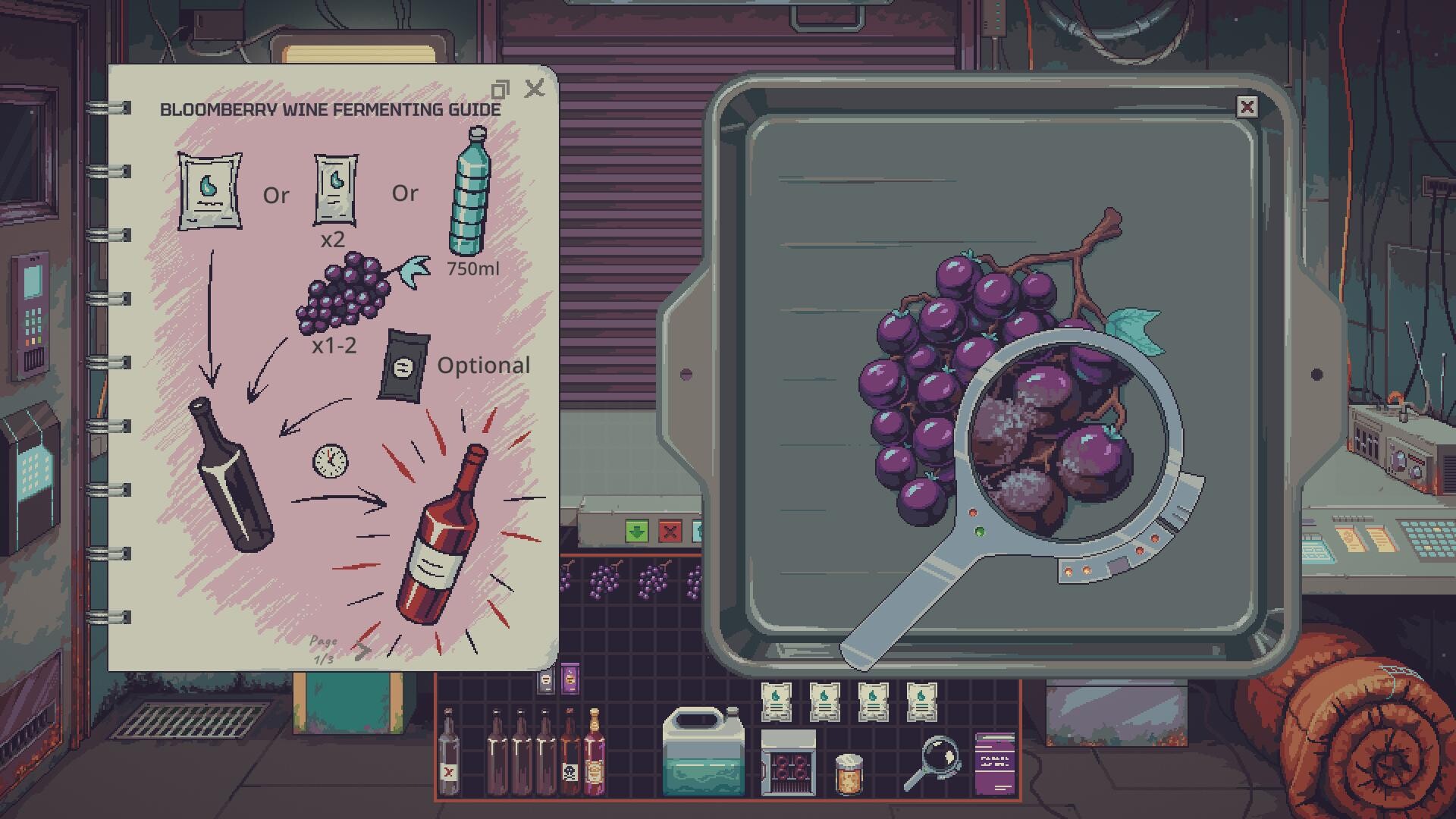
Assemble, wait, then check the finished wine
- Measure 750 ml
Keep this water separate from the rest of the batch you intend to sell. Use tested High-Quality water for this case.
- Fill the wine bottle
Add the measured water and one standard berry. Add normal yeast; check the yeast name before using it.
- Leave it to ferment
The community demo record gives two days with ordinary yeast, four without yeast and one with Super Yeast.
- Inspect the finished bottle
This ingredient case is reported to yield Production Wine. Check the actual completed item before selling it.
- Sell or keep aging
Choose with your next bills and supply visit in mind. Fermentation finishes before ordinary aging begins.
The recipe case combines one standard berry, High-Quality water and ordinary yeast. If you substitute Basewater, the reported result falls to Homebrew. If you omit yeast, the batch takes longer and loses its yeast contribution to quality. Adding a second berry can improve the result, but it is still an extra ingredient with its own purchase cost.
Synthetic Yeast changes the product: it is not a cheaper ordinary-wine ingredient. It produces Gloomberry wine, which is contraband and does not use the same aging decision. Keep it outside this normal-wine case.
Aging is a cash decision after fermentation
Ordinary completed wine gains value as it ages. That does not make waiting free: the bottle and its value remain unavailable for the next purchase. If you need the sale to cover the next bill or buy the next complete ingredient set, sell the finished wine. If cash and bottles are comfortable, keeping a bottle to age is reasonable.
AgeWell gives completed wine extra aging during the night and needs power. It does not shorten fermentation. Buying it for a shop that cannot yet fund ingredients or electricity solves the wrong problem.
End-of-batch check: berries, water and yeast have gone into the product; the bottle is still occupied until you sell the wine. Before repeating, secure another empty bottle and sound fruit. Compare the actual sale offer with all consumed ingredients rather than treating the wine's displayed value as cash already earned.
Buy to the next supplier visit
After the related supplier unlock, the retired winemaker visits on Friday. The community record lists berries, bottles and yeast among his stock. The Sunday supply runner is another bottle source, but with a markup; do not assume every emergency restock has the same margin.
Wild's seller referral can bring a hydroponic farmer with berries once winemaking is unlocked. It shares a pool with other sellers, so it is not a guaranteed daily grape delivery. Keep a realistic number of batches funded from fruit and bottles actually on hand.
The supplier calendar connects these visits with water and rat-farming supplies. The September demo observations are credited to The Exceptional Fisherman's original Steam guide; no in-game recipe test by this site is claimed.
Choosing from different fruit, water or yeast on hand? Compare wine recipes: choose a batch from the ingredients you have.