Rat farming
Probably Stolen rat farming: breeders, food and cage space
Start with a cared-for small colony, keep your useful breeders separate from meat decisions, and prefer faster Growth with lower genetic Hunger. Feed the animals properly. For meat, compare the next butcher bracket with extra feed and the cage space it occupies; 400 g is not a universal profit optimum.
Fund the animals before increasing their number
Case: you have a cage and feeding equipment but limited spare cash. Start by keeping the existing group fed and maintained. Adding females or buying a second cage is an expansion purchase with recurring food, cleaning and repair consequences.
The retired rancher is the targeted supplier for cages, livestock feed dispensers, rats, a gene scanner, a meat cleaver and care equipment. The community supplier record places the unlocked rancher on Friday. Buy the missing part of one working setup before acquiring more animals.
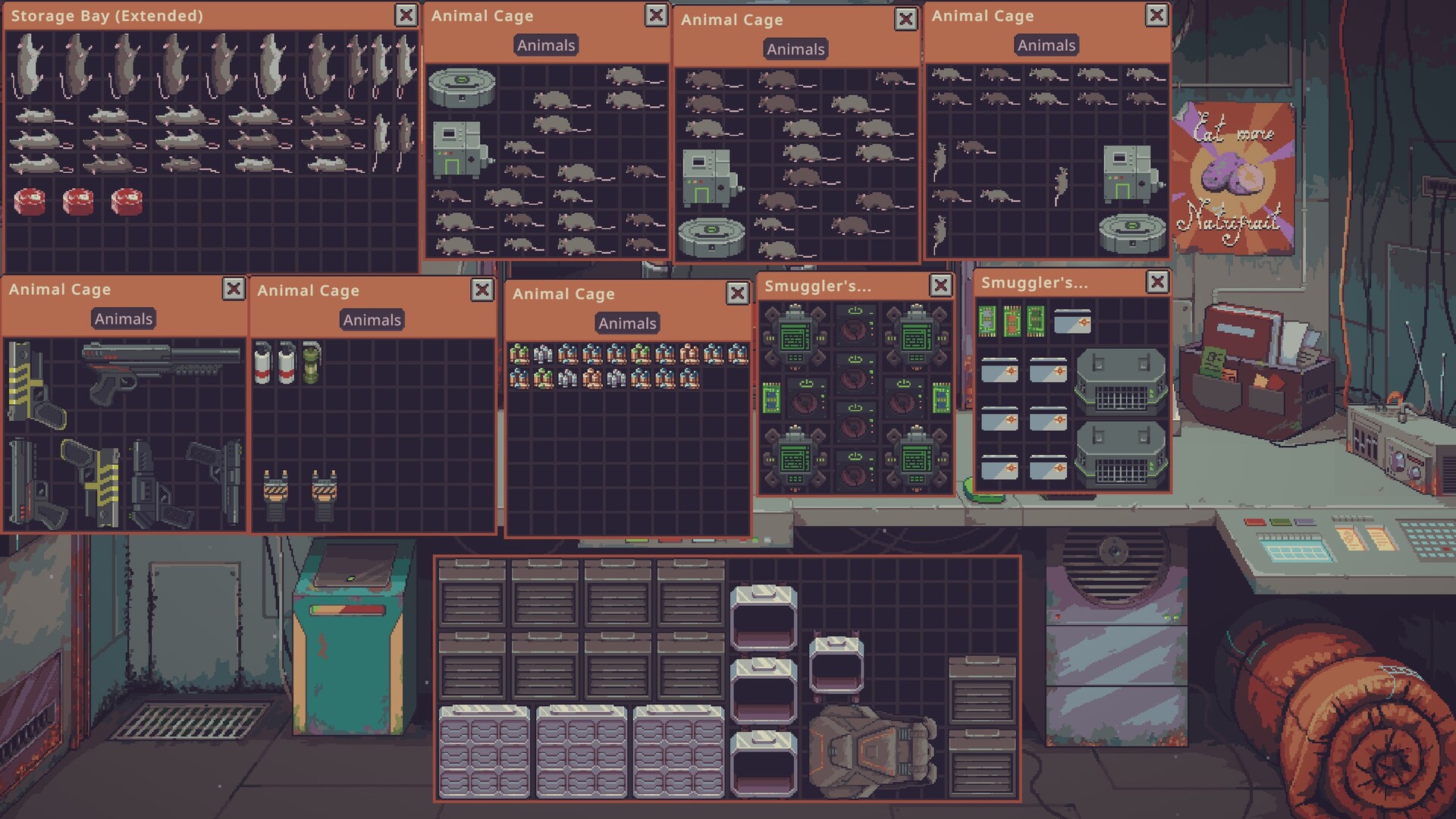
Make the daily loop work first
- Provide enough usable food. Lower genetic Hunger Rate means less feed consumption; it does not mean a rat should be left hungry. The community growth experiments report slower growth when current hunger is low.
- Check the cage and offspring space. Do not plan more births than your available inventories can accommodate. Keep room for both animals and the feeding/cleaning equipment.
- Remove waste. The cleaning robot moves animal feces into its own storage. Keep its power available and clear the waste it collects.
- Inspect cage durability. UPDATE 049 makes wear scale with the size of the living animals. Scrap repairs restore half the cage's maximum durability; ingot size upgrades also increase durability.
- Recheck the group the next day. Review growth, health, food and cage wear before buying more rats or promising another meat batch.
UPDATE 049 allows cage equipment such as the feed dispenser and Vacuum Robot inside a cage, while preventing ordinary machines from being placed there. The robot's electronic upgrade adds an incinerator, but doubles its power consumption when enabled. Budget that running cost before using it as an automatic waste solution.
Choose replacements for the job you want them to do
| Trait or condition | Useful decision | Limit |
|---|---|---|
| Higher Growth | Prefer it when selecting offspring for a meat-production strain. | The rat still needs enough food and cage room. |
| Lower genetic Hunger Rate | Prefer less feed demand at similar growth. | Do not confuse it with low current hunger from underfeeding. |
| Immunity | The community researcher reports 50 as a useful ordinary-disease breakpoint. | It is not immunity to every disease; prion exposure is separate. |
| Litter Size, health and longevity | Keep useful breeders healthy and replace them with clearly better mature offspring. | More births also need space; longevity does not keep meat growth fast forever. |
The gene scanner can reveal the two alleles behind a displayed trait. A promising allele can justify retaining an otherwise ordinary offspring as a future breeder. Do not butcher every unfamiliar-looking rat before checking whether it is a useful replacement.
fenix10000's October 2 community experiments use one male with three or four females as a workable breeding group. Treat that as a reported starting arrangement, not permission to exceed the space and care your cage can support. Keeping a smaller group is preferable to an unfunded expansion.
Keep a breeder for its offspring; keep a meat rat for its next useful gain
- Inspect the offspring
Reserve genuinely useful breeding replacements before treating the rest as meat stock.
- Feed through growth
Keep food and care funded; underfeeding can undermine the Growth you selected.
- Compare the next bracket
Ask what additional butcher output another day will achieve, then compare feed and occupied cage space.
- Butcher or continue
Take the current return if the next gain is poor; continue when a worthwhile bracket is close and space is available.
- Sell, repair, replace
Turn meat into cash, replenish feed and repair the cage before adding the next juvenile.
Case: a mature meat rat is above 400 g while a fast-growing juvenile is waiting for the same cage space. Keeping the adult may still add meat value, but replacing it can be better when the juvenile gains useful weight faster. If no juvenile is waiting and cheap feed is available, another adult growth day can still make sense.
The original community thread corrects its early 400 g advice: that weight reaches a premium cut, but does not prove the best final weight. For the knife/cleaver choice, health checks and a wait-or-replace comparison, use the rat-butchering guide.
Let the next constraint decide the purchase
If feed is short, replenish food. If durability is low, repair before buying more animals. If all care is funded and space repeatedly blocks useful young rats, a larger or additional cage can address a real bottleneck. A gene scanner improves selection, but it does not replace food, cleaning or maintenance.
Keep rat-derived food out of the routine feeding plan: the community researcher identifies it with a separate prion risk. A normal disease breakpoint does not make cannibal feeding safe. Before repeating the cycle, confirm that meat sales left enough for the next feed and repair bill.
Genetic and growth decisions here are bounded community demo observations, with cage and robot changes checked against UPDATE 049. The site has not independently reproduced the experiments.
For the difference between a displayed average and inherited value, follow rat breeding genetics: choose useful offspring.