Rat farming
Probably Stolen rat butchering: knife, weight and when to free the cage
Current player replies say knives and the Meat Cleaver yield the same amount of meat; weight and health matter more than the tool’s appearance. Keep useful breeding stock first. For a meat rat, compare the next valuable cut with the extra feed and cage time needed to reach it. The corrected community research treats 400 g as a premium-cut target, not a universal profit optimum or a command to slaughter on a fixed day.
Reserve breeders before choosing meat stock
A rat with a valuable allele or a necessary breeding role is not just its current meat value. Compare the two inherited alleles and keep a funded replacement before removing a productive breeder. A heavy adult is not automatically the animal whose removal improves the colony most.
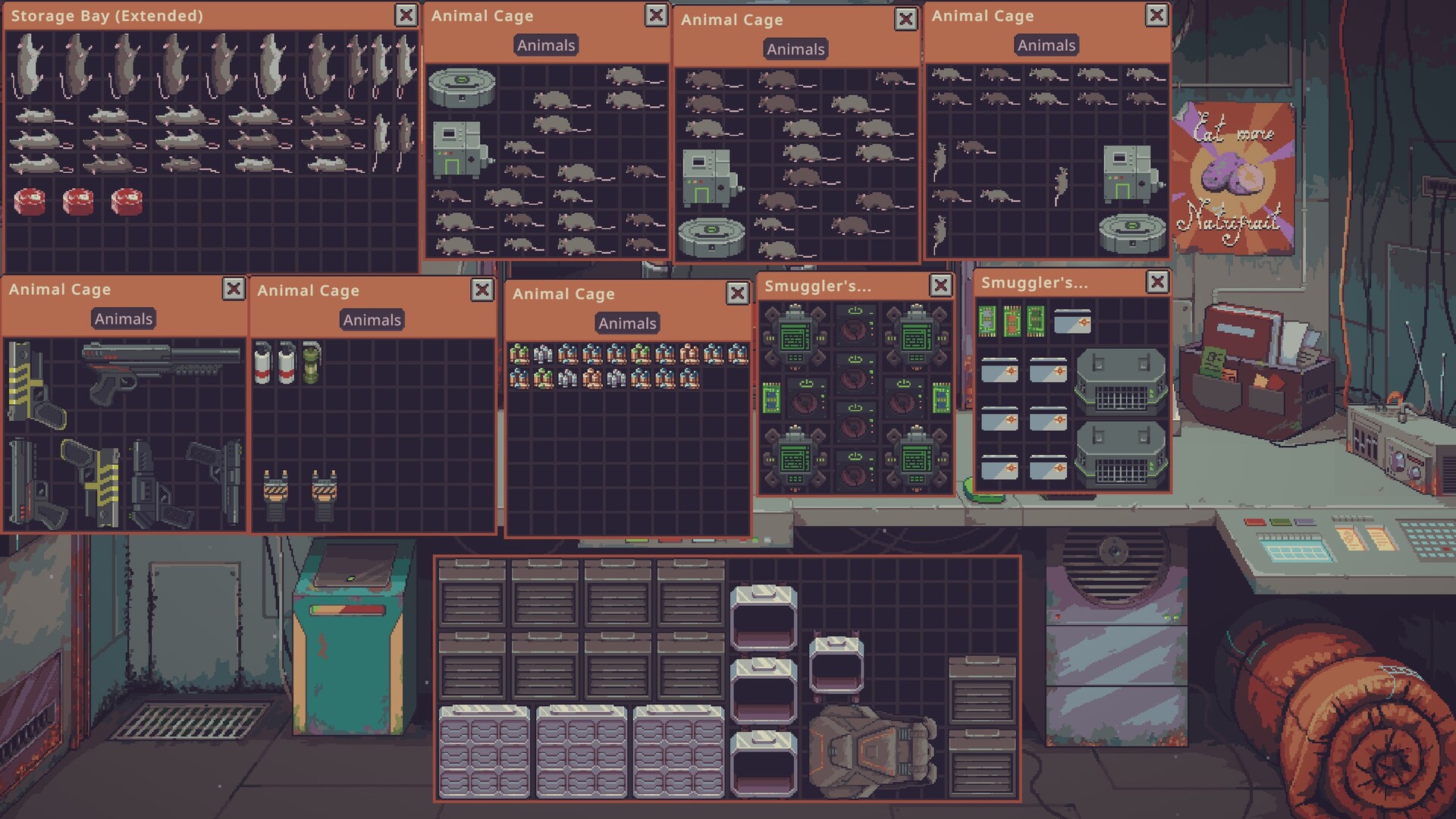
If food or space is tight, make an explicit choice between a useful breeder, a growing juvenile and an adult held only for meat. Keeping every animal indefinitely can prevent the next productive generation from using the same cage.
The bigger-looking knife is not a proven yield upgrade
The October 17 “Meat Cleaver vs Knife” question asks precisely whether the tools give different amounts. Two replies describe equal meat output with current knives; one also points to weight and health. Treat this as current community observation rather than an official all-future-tools guarantee.
The older accepted Steam answer describes using a knife on the living rat to kill it, then using it on the corpse to butcher it. Confirm the intended owned animal before the first use and keep the resulting corpse distinct from breeding stock. This is an action with a different endpoint from simply moving an animal.
The unlocked retired rancher is a recorded source for a Meat Cleaver. If an owned suitable knife already does the job, do not buy a cleaver solely because you expect its larger sprite to multiply meat.
Check weight, health and the next cut
| Observed point | What it supports | What it does not support |
|---|---|---|
| Weight affects the output cut. | Another feeding day may be useful just below a better bracket. | Every additional gram immediately earns more meat. |
| A current reply mentions 300 g and 400 g cut changes. | These are reported points to check against the animal and output. | A complete verified table of every weight, health state and yield. |
| The corrected October research identifies 400 g as a premium-cut target. | It is a meaningful target in that player’s cut comparison. | Slaughtering every rat at 400 g regardless of food, space or genetics. |
| Health can affect output in the current discussion. | Inspect the animal and do not ignore disease tags. | A universal exact disease penalty or a guaranteed healthy cut value. |
The original researcher describes much faster juvenile gain and slower adult gain, with elders eventually losing weight. Those phases help frame the decision, but a fixed “kill on day four” rule ignores the animal’s actual Growth, food and current bracket.
Ask two different economic questions
- Useful breeder or rare allele?
Keep a funded breeding role first. Do not judge by weight alone.
- Dedicated meat animal
How far to the next useful cut?. Inspect health and actual weight.
- Cost of waiting
Food plus occupied cage time. Compare the juvenile alternative.
- Choose the better next cycle
Keep growing or butcher now. Retain replacement and care inputs.
Case A: an adult is close to a useful next cut, cheap food is already available and there is no juvenile waiting for the cage. Further growth can still make sense after 400 g.
Case B: another slow adult feeding period would block a funded fast-growing juvenile. The adult may still gain sale value, yet freeing the cage can produce more value over the same time. This is the correction the original researcher made after another player challenged the 400 g claim.
Use the next useful cut’s added value, the feed required to reach it and the alternative use of the cage. Unknown actual buy/sell prices are a reason to compare the current offer, not to invent a universal profit figure.
Sell the output without damaging the breeding loop
Inspect the resulting meat and its tags, then offer it to a buyer that accepts it. Preserve enough cash and care inputs for the next animals. Do not confuse a high inventory valuation with a completed sale.
The October researcher separately warns about rat-derived feed and Prion-contaminated feeders; Immunity 50 for one ordinary disease check is not Prion immunity. Avoid returning rat meat into the same breeding food loop on the assumption it is free feed.
Sources: October 17 knife/cleaver discussion, October rat research and corrected slaughter reasoning, and the older accepted knife procedure.