Water
Probably Stolen Water Purifier not working: test the label, power and contaminants
Test the water before replacing the machine. A current player waited a week for a Ghostwater label to change, then discovered the water was already good when tested. If the measured purity really has not improved, check charged power, the loaded vessel and last-night removal information. A working purifier can also reach a contaminant floor; more Performance does not automatically lower that floor.
First separate an old label from a failed operation
In the October 15 question, a player left 6,000 ml of Ghostwater in a purifier for a week and added purification tablets, but still saw Ghostwater. After replies prompted a test, the player confirmed that it was good water: the missing step was checking the new liquid rather than waiting for its existing label to tell the story.
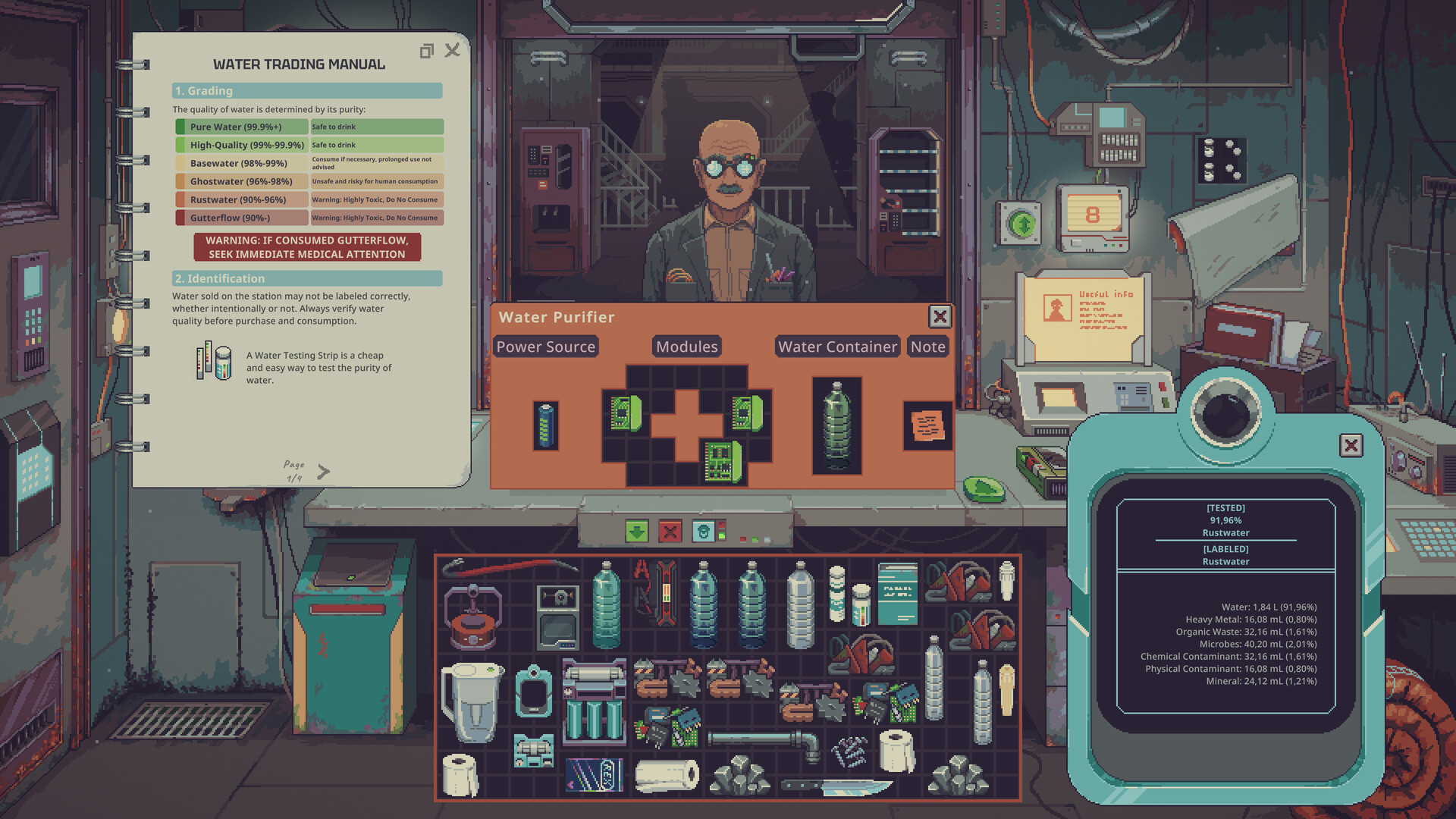
Use test strips for water purity or AquaScan for purity, volume and constituent breakdown. Apply the matching grade after checking the actual result. Repeating treatment merely because an old bottle name remains visible can consume charge and filter durability without addressing a real problem.
Check the working setup and the last night
| Check | If it fails | Next action |
|---|---|---|
| Usable battery charge | The machine cannot perform its expected powered operation. | Charge or swap the owned battery, then fund the next run. |
| Correct loaded vessel and liquid | No intended liquid is being processed. | Open the machine and load the actual input slot. |
| Last-night processing information | A player reply recommends the hover tooltip’s removed-volume information. | Look for whether work occurred before changing the layout. |
| New tested purity and constituents | The label alone is unchanged, or the contaminant mix is unclear. | Retest and compare the measured contents. |
Do not assume a week elapsed means seven useful operations occurred. Read what ran, what charge was available and which vessel was inside. A later sale or swap can also leave you looking at a different bottle than the original input.
Use the tool for what remains
| Treatment | What the sources support | What it does not prove |
|---|---|---|
| UV | Converts microbes into water; can be used directly or in the pitcher. | It does not remove every chemical or metal contaminant. |
| Pitcher with a fitted filter | Pouring through it treats the contaminants the filter can handle. | A clean-looking bottle is not proof of Pure Water. |
| Purification tablets | A specific chemical treatment with capacity and composition consequences. | Adding more indefinitely is not a general fix for every floor. |
| Powered Water Purifier | Converts remaining contaminants subject to composition and machine configuration. | No one fixed number of days guarantees every input reaches the desired grade. |
The HydraTech Micro Purifier is a different item with its own behavior. UPDATE 049 fixed its precision at the 98% endpoint; that does not give the powered purifier an unconditional 100% result. Use the ordinary batch route when the remaining contamination is handled by the tools you already own.
A slow run and a final limit need different choices
The community machinery guide distinguishes conversion per cycle from residual contaminant concentrations. Performance changes work per cycle; Quality changes the possible endpoint. If a machine ran but stops improving a remaining constituent, repeatedly buying speed can leave the limiting endpoint unchanged.
- Test the actual liquid
Did purity already improve?. Relabel only the measured grade.
- If not: did the machine run?
Check charge, vessel and last night. Fix missing inputs first.
- If it ran: inspect constituents
Which contamination remains?. Match the available treatment.
- Then compare speed and floor
Performance is not a lower floor. Fund only the useful next step.
Read the machine information after fitting modules, then compare actual tests across a funded run. More Performance can shorten processing, but it does not guarantee that a particular Quality setting will reach every target grade.
Finish with a measured action
If the water already improved: apply its true label and move to a sale, keeping the next batch’s container and charge. If it never ran: repair the input/power setup and check the next result. If the machine ran but the needed grade is blocked: choose a supported treatment or a useful Quality change rather than adding tablets blindly.
The original player’s lost-water story also involved overnight theft. That is a separate stock-protection problem, not evidence that the purifier destroyed or failed to clean the water.
Source: How the heck does purifying water work?. Community mechanics describe the current demo; read the actual item and customer information before spending.