Water
Probably Stolen Moisture Farm: set up output, modules and the next water sale
Open the Moisture Farm, fit a usable charged battery and a water container with room, then let it run overnight. The community baseline is 1,000 ml of Ghostwater for 4 charge per day. Quality changes the produced water composition, Performance changes volume and Efficiency changes charge demand. Test the actual output before labeling or selling it.
Load a complete water-producing setup
A farm without a receiving container cannot close a production cycle. Open the machine rather than placing a bottle nearby. Check the power slot, module grid and output-container slot, then make sure the receiving vessel has enough room for the output shown by your configuration.
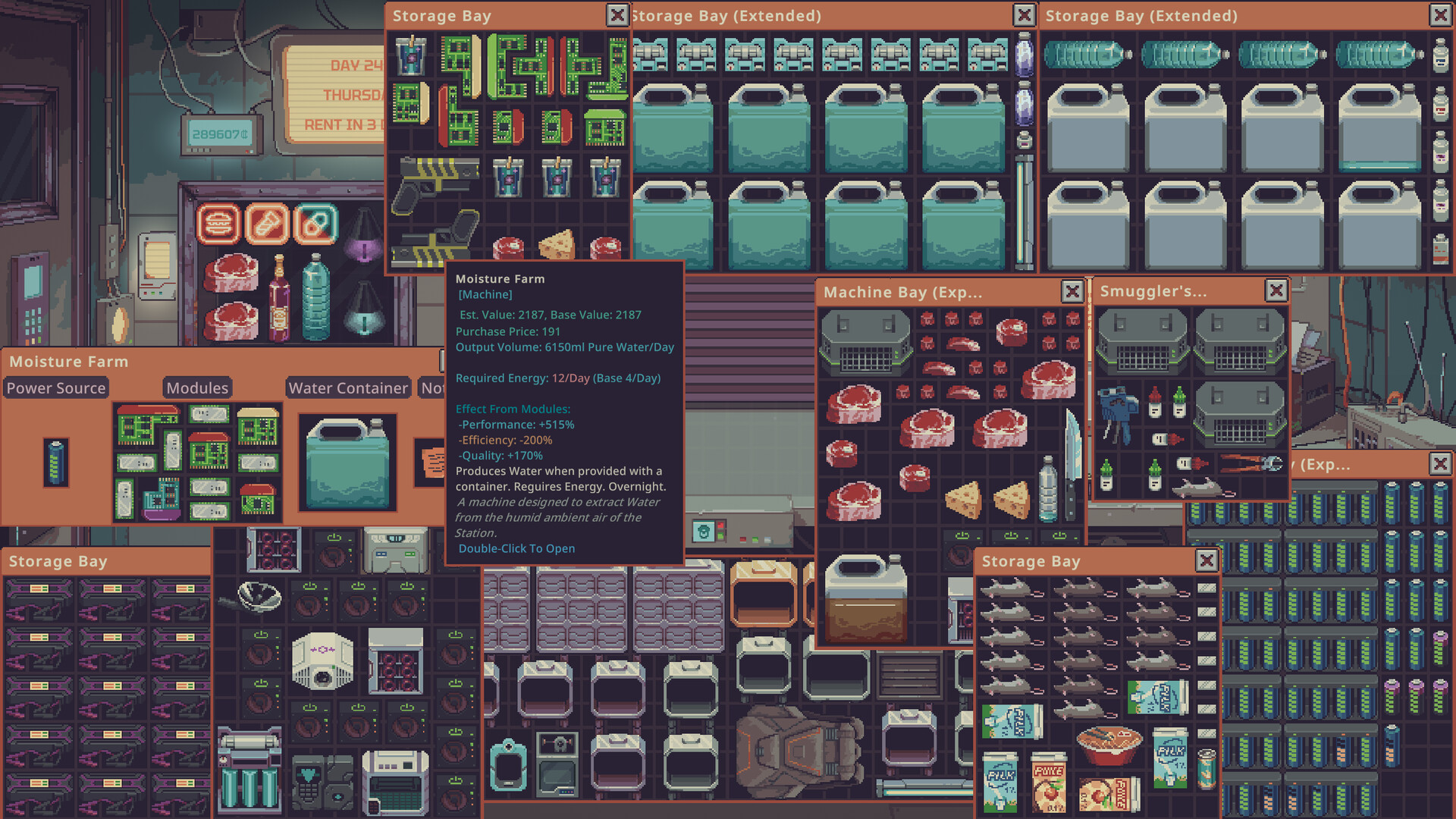
Keep a working treatment/sales route for the water it produces. If your only usable vessel is occupied by unsold stock, emptying a farm’s output into another container or selling some finished stock may solve the bottleneck more cheaply than buying another machine.
Choose the output constraint first
| Stat | Recorded farm effect | Practical check |
|---|---|---|
| Quality | Each complete 50% step changes output quality in the community observation. | A change below the next step may not change the output category. |
| Performance | Each 1% changes baseline volume by 10 ml per day. | Your output vessel must fit the resulting volume. |
| Efficiency | Each complete 25% step changes the baseline 4-charge demand by one. | Read the machine’s actual required charge after all modules. |
These are farm-specific observations. Do not use the Water Purifier’s residual-contamination rules as a farm-output formula. The community guide reports +150% Quality producing Pure Water without a separate filter, but its lower-quality filtered-output probabilities are not a guaranteed roll for your save.
Treat the product you actually obtained
- Before night: complete inputs
Battery plus receiving vessel. Read volume and charge demand.
- After night: inspect output
Measure the actual water grade. Do not trust an old bottle label.
- Choose any needed treatment
Owned UV, filter or purifier. Retest the finished liquid.
- Sell and retain capacity
Keep the next output vessel. Fund the next night of charge.
Use a test strip or AquaScan after production. If the output needs basic filtering, run the owned UV/pitcher route and retest it. Apply the measured grade before selling. A vessel’s previous label is not proof that the new water has the same concentration.
The source notes that combining several output batches can change the aggregate concentration. If pooling water, calculate the volume-weighted mixture and check vessel capacity; do not average grade names.
Expand the bottleneck that is actually limiting sales
Case: your basic farm runs, but you own only a small output vessel and one pitcher. A large Performance increase can create a capacity problem before it earns another credit. Acquire a suitable vessel and a buyer route first.
If capacity and buyers are established but the output needs costly repeated treatment, Quality may address the actual bottleneck. If the product is acceptable and charge is short, inspect Efficiency and charging instead. Preserve the next bill and the power/treatment inputs needed to sell the additional volume.
The output tooltip is useful evidence for the current fitted machine. It is not a promise that the same sticker price or module arrangement is available from every supplier.
Check loading before blaming the grade
| Symptom | Check |
|---|---|
| Nothing produced | Usable charge, a correctly loaded water container and enough capacity. |
| Water exists but the label looks unchanged | Test it; the label can lag behind the actual liquid. |
| More volume than the receiving setup can handle | Read Performance and the displayed output; obtain capacity or reduce the layout. |
| A purifier later makes no progress | Use the separate purifier diagnosis; a farm’s output rules are not its cleanup limits. |
Source: Machinery and You, Moisture Farm section. Community mechanics describe the current demo; read the actual item and customer information before spending.